
Self-paced courses, microlearning, & internal training experiences
Instructional Design Projects
I design learning experiences that stick by simplifying complex ideas, telling clear stories, and keeping the learner at the center.
Sample Projects
These examples are based on real-world scenarios and were created to show how I approach instructional design. While I’m coming from a marketing background, the skills I bring – like simplifying complex ideas, telling a clear story, and designing with the audience in mind – translate directly into learning experiences that are thoughtful, engaging, and built to stick.
Project 1: Understanding Credit Cards
I developed this training using the ADDIE framework to design and build a self-paced course in Articulate Rise. The primary goal of the course is to help tellers at a financial institution understand the basics of credit cards.
*This is a fictional scenario, but represents a realistic learning need and how I’d help solve it.

What this project shows
- Needs analysis & stakeholder alignment
- ADDIE-based instructional design
- Self-paced course development in Articulate Rise
- Learning and business impact measurement
Tools Used

Credit Union landing page
(research)

PowerPoint
(designing content outline)

Articulate Rise
(developing course)

ChatGPT
(first draft of copywriting)
ADDIE Framework in Action

Training Need (Setting the Stage)
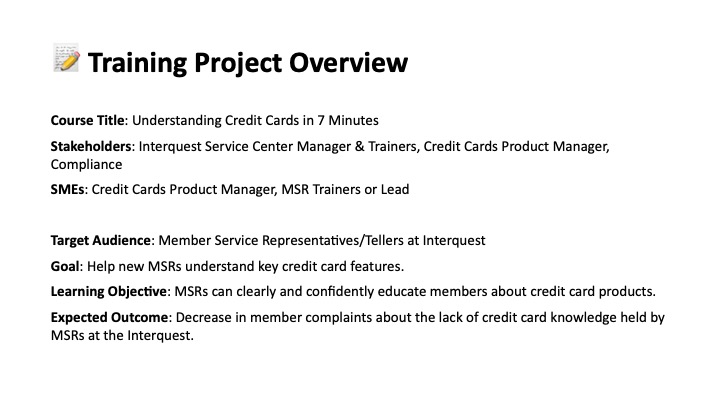
The Insights team identified a theme in member feedback at the Maine Service Center: Frustration with unclear answers from Member Service Representatives (MSRs) about credit card products.
After escalating the concern to Learning & Development, the L&D team partnered with Service Center Operations and the Credit Card Product Manager to explore solutions.
Together, they determined the need for a quick training to equip MSRs with the knowledge to confidently support member questions.

Creating the Blueprint
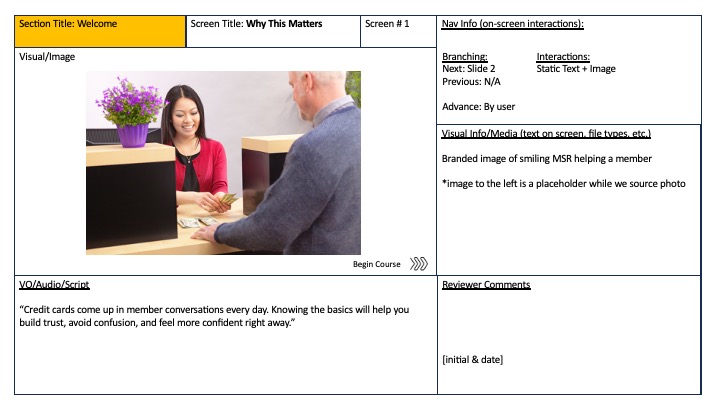
I used a simple Storyboard template in PowerPoint to outline the content of the course and gain approvals from the appropriate stakeholders before building the course in Articulate Rise.

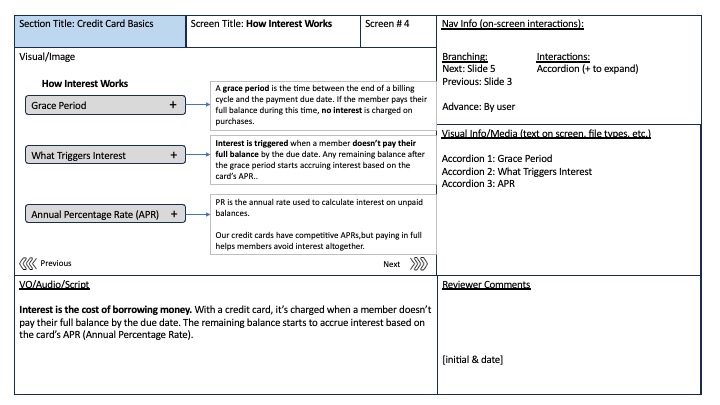
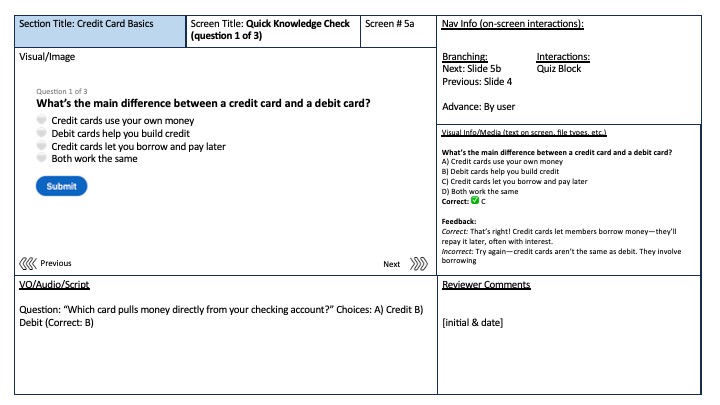
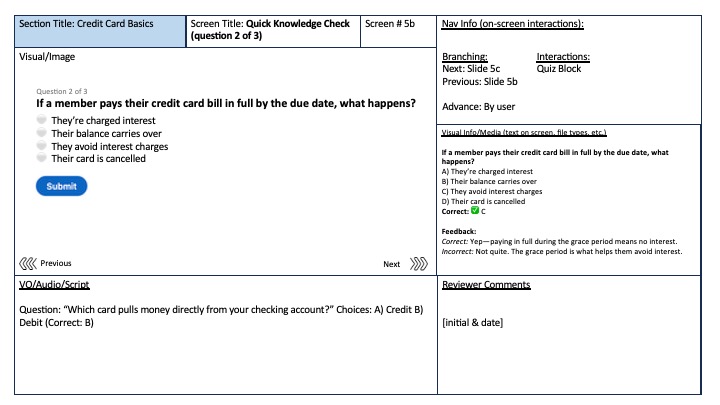
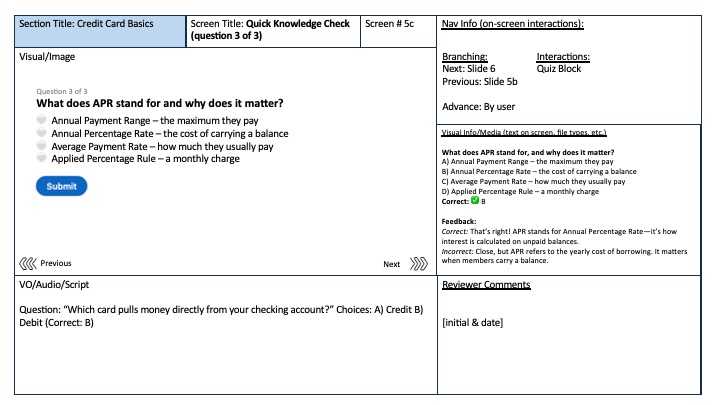

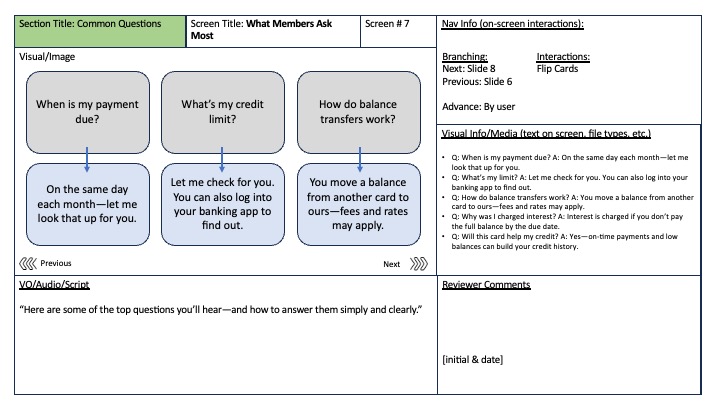

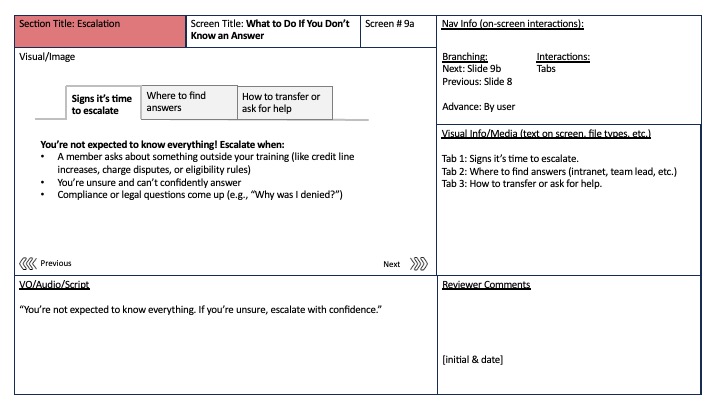
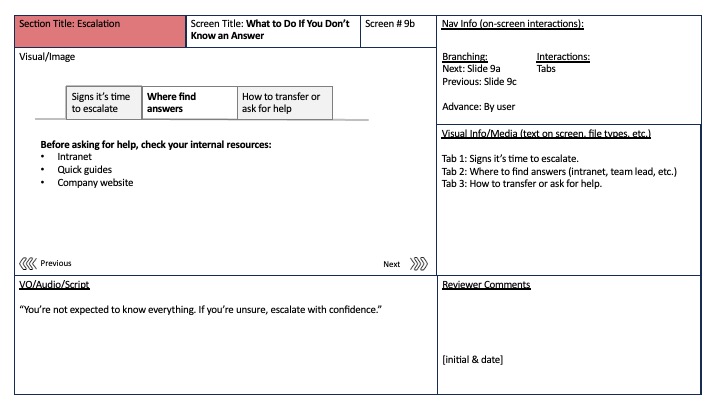
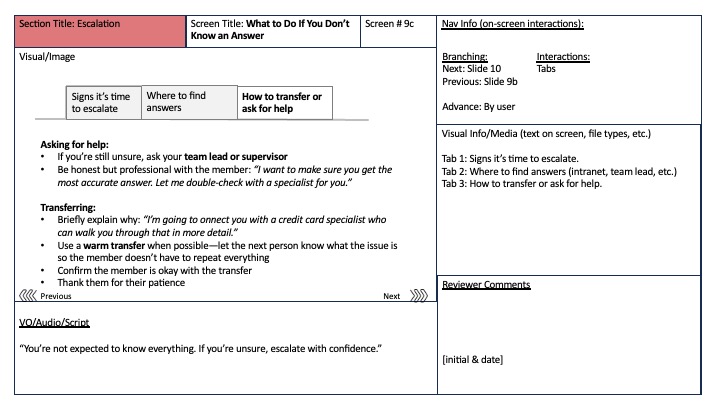
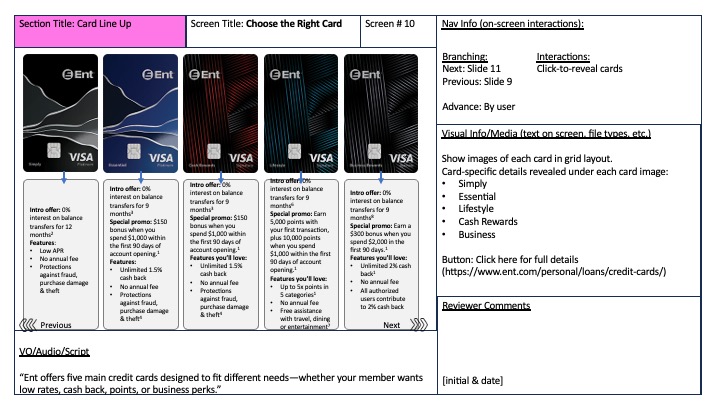
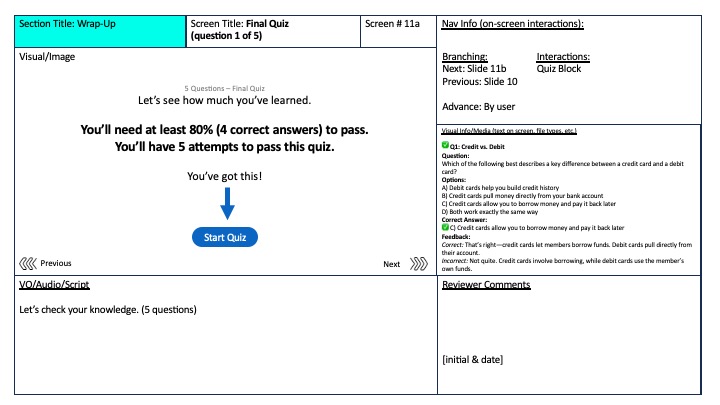
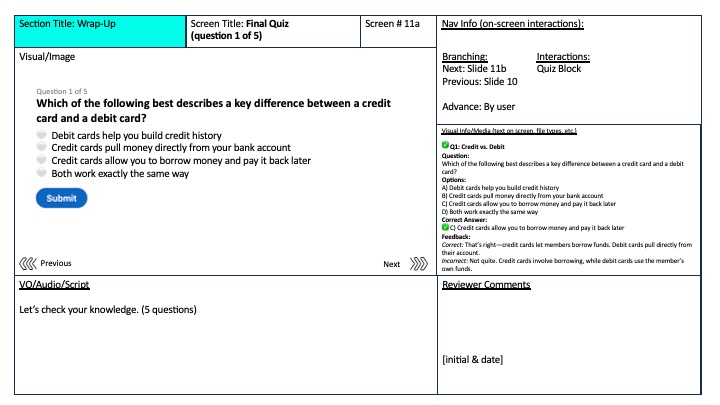
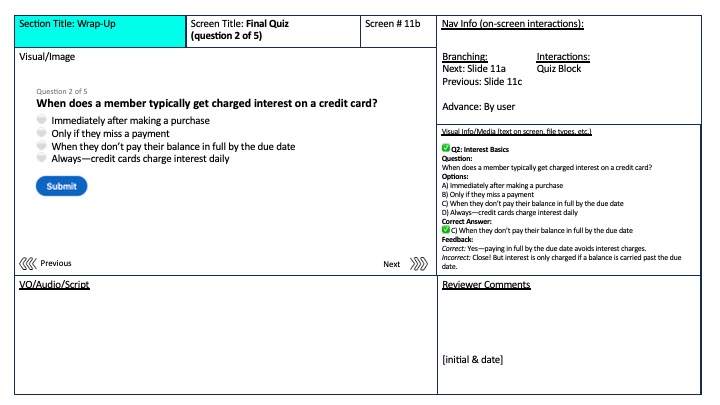
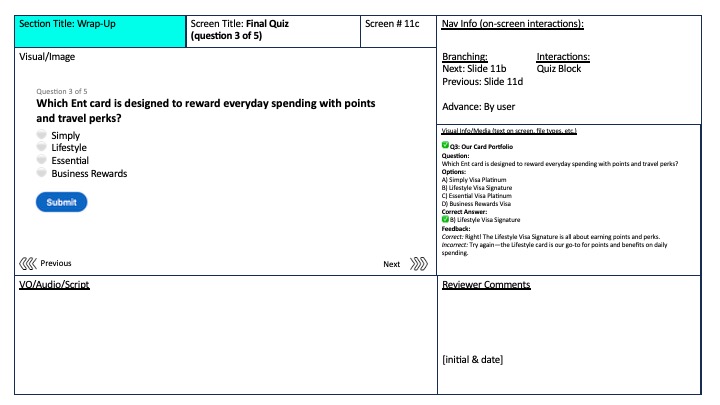

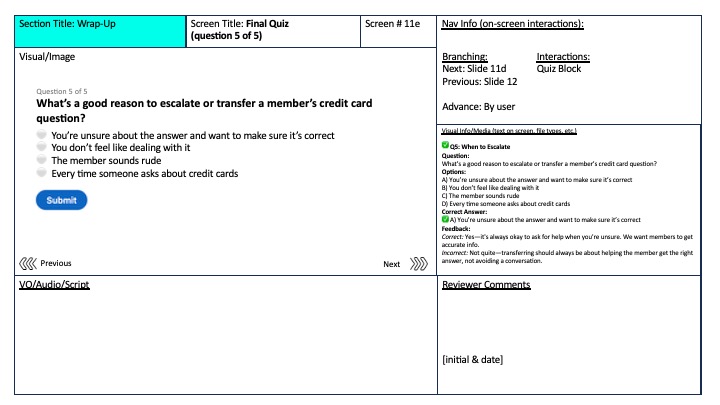
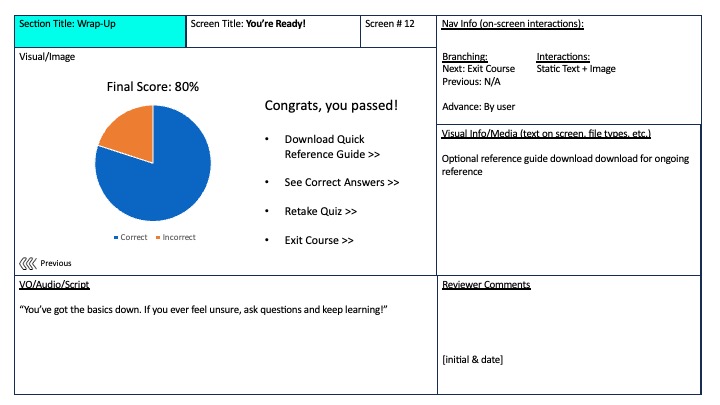

Putting the Pieces Together
This course was built in Articulate Rise, using a mix of interactive blocks, real-world scenarios, and visuals to support key concepts.

Self-Paced, Online Instruction
I exported and embedded the Rise course to my website for portfolio purposes, but in a real-world setting, I would publish it to an LMS (like Canvas) to assign and track completion.
During implementation, I’d ensure learners have a smooth experience by testing functionality, providing support resources, and addressing any technical issues or content confusion that arise.

Success By the Numbers
Sample outcomes based on realistic performance benchmarks.
Learner Reaction
- Course Completions: 50
- NPS: 47
- Course Rating (out of 5): 4.7
Knowledge Gained
- Pre-Course Quiz Average: 72%
- Post-Course Quiz Average: 93%
On-the-Job Application
- 90% of managers observed improved confidence in product conversations (surveyed 4 weeks post-launch)
- Help desk tickets about credit card features dropped 35% in the 6 weeks after rollout
- Self-reported confidence in explaining credit card basics increased from 3.1 to 4.5 out of 5 (before vs after)
Business Impact
- 15% increase in credit card applications from frontline referral channels after rollout
- Call resolution time for card-related inquiries decreased by 12%
- Reduced compliance errors on card-related disclosures by 40% (tracked by QA team)
Project 2: Giving Constructive Feedback
This micro learning video was developed using the program, Synthesia. This AI-powered platform allowed me to outline, build, and publish a 2-minute education course in just a few hours.
The goal of this video is to help people in a professional environment give constructive feedback.
What this project shows
- Rapid microlearning design and development
- Scriptwriting and content structuring for short-form learning
- Use of AI tools (ChatGPT + Synthesia) to increase speed and efficiency
- Exploration of scalable, lightweight learning solutions
Video Development
ChatGPT
(script generation)

Synthesia
(AI-powered video software)
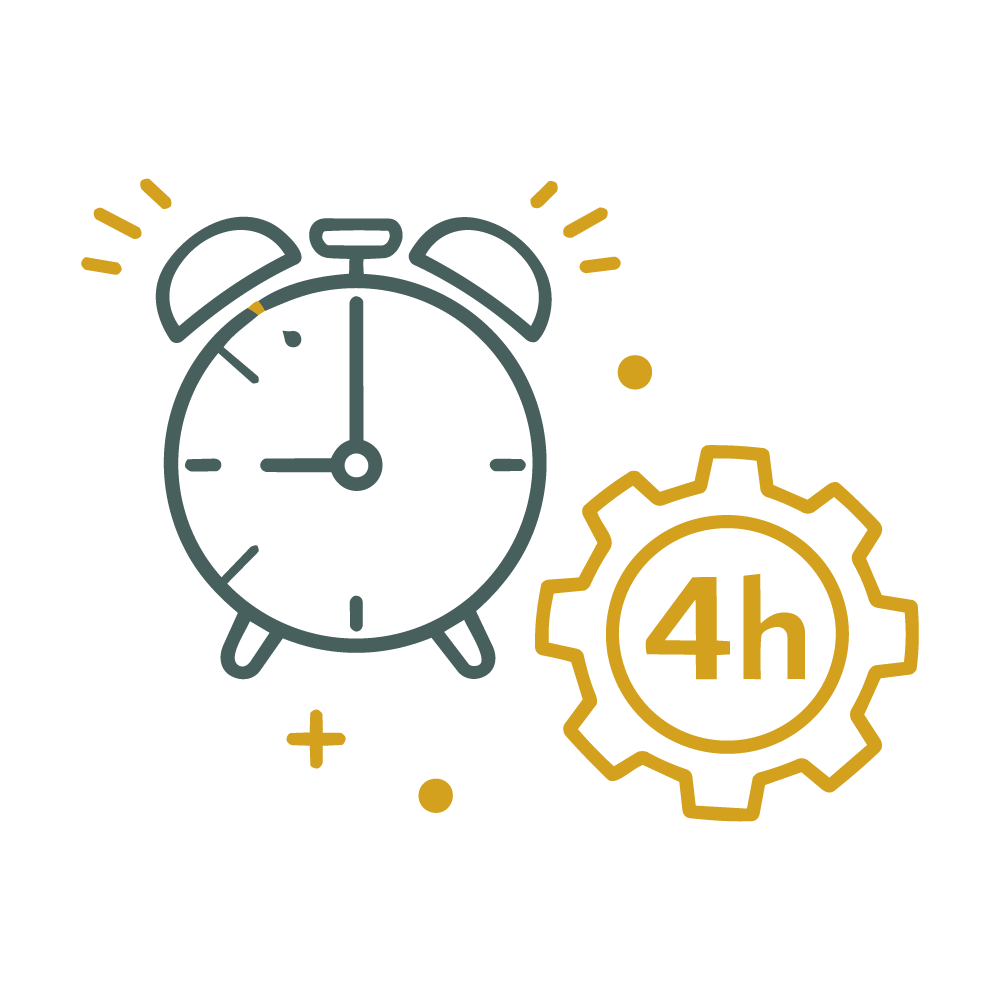
Time to create course:
~4 hrs
Full Micro-Learning Course
Course Development Process
My personal goal for developing this video was speed + accuracy. I wanted to explore a new tool to see how quickly a usable micro learning course could be developed. I picked Synthesia, learned how to use the tool, used ChatGPT to speed up script writing, then built the video in approximately 4 hours from start to finish.
AI might not be 100% seamless for video yet, but it’s getting close. The opportunities to use it for course development and to increase efficiency are nearly endless.